main website
- Switch to...
- Education Website
How to offset energy volatility
Oil, gas and energy prices are always a subject of concern and debate amongst politicians and consumers alike. Companies trying to turn a profit, schools trying to preserve their limited budgets.
Anyone who has filled up their car with petrol or diesel recently will have felt an uncomfortable increase. Most energy price rises can be traced back to the price of crude oil (petroleum). Globally, it is estimated that over 100 million barrels of crude oil are consumed every single day (International Energy Agency) and much of this is sourced in countries across the Middle East although the USA, China and Russia are also major suppliers.
One of the most important things for schools to consider right now is the volatility of the market. Whilst a steady price rise can be accounted for into yearly budgets, volatility is harder to cope with in any electricity contract. The first three months of 2026 have proved immensely volatile for petrol prices, with conflicts in the Middle East.
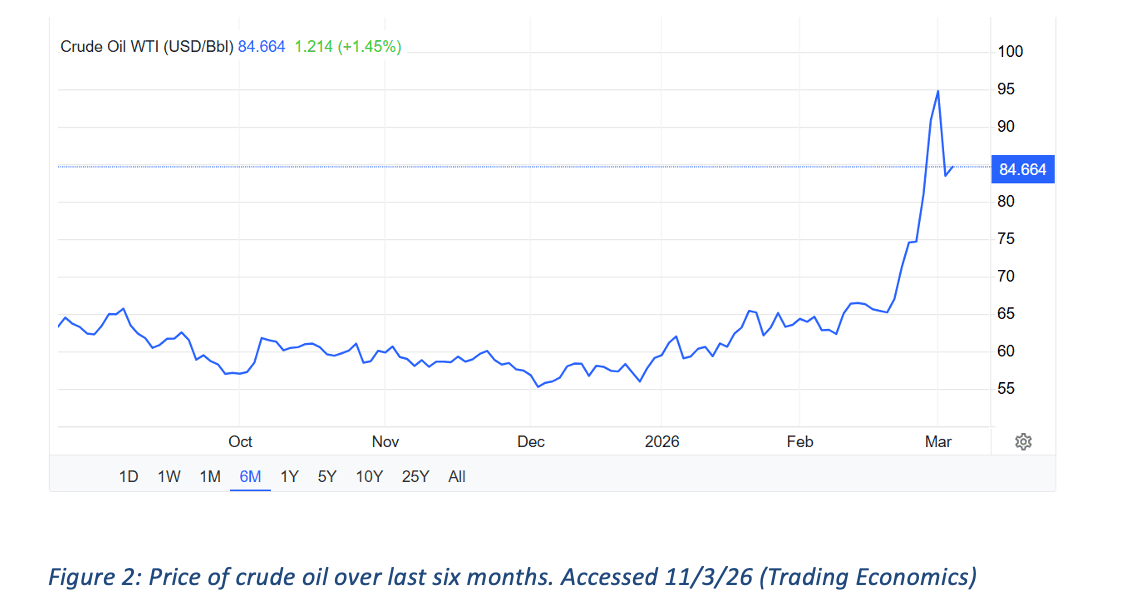
Let’s look at the last six months in more detail...
As the table above shows, the market was reasonably stable towards the end of 2025, before rising slightly with increased uncertainty in global events. A sudden, large increase coinciding with the US attack on Iran. The last time oil and gas prices surged so markedly was in February 2022 – coinciding with Russia’s attack on Ukraine.
Whilst large companies can often absorb additional costs, smaller businesses and schools (particularly those out of contract or re-negotiating their contract) are far more vulnerable to these volatile market changes.
As well as the basic supply and demand effect, causing immediate price rises, global volatility also has a knock-on effect on the longer-term financial markets.
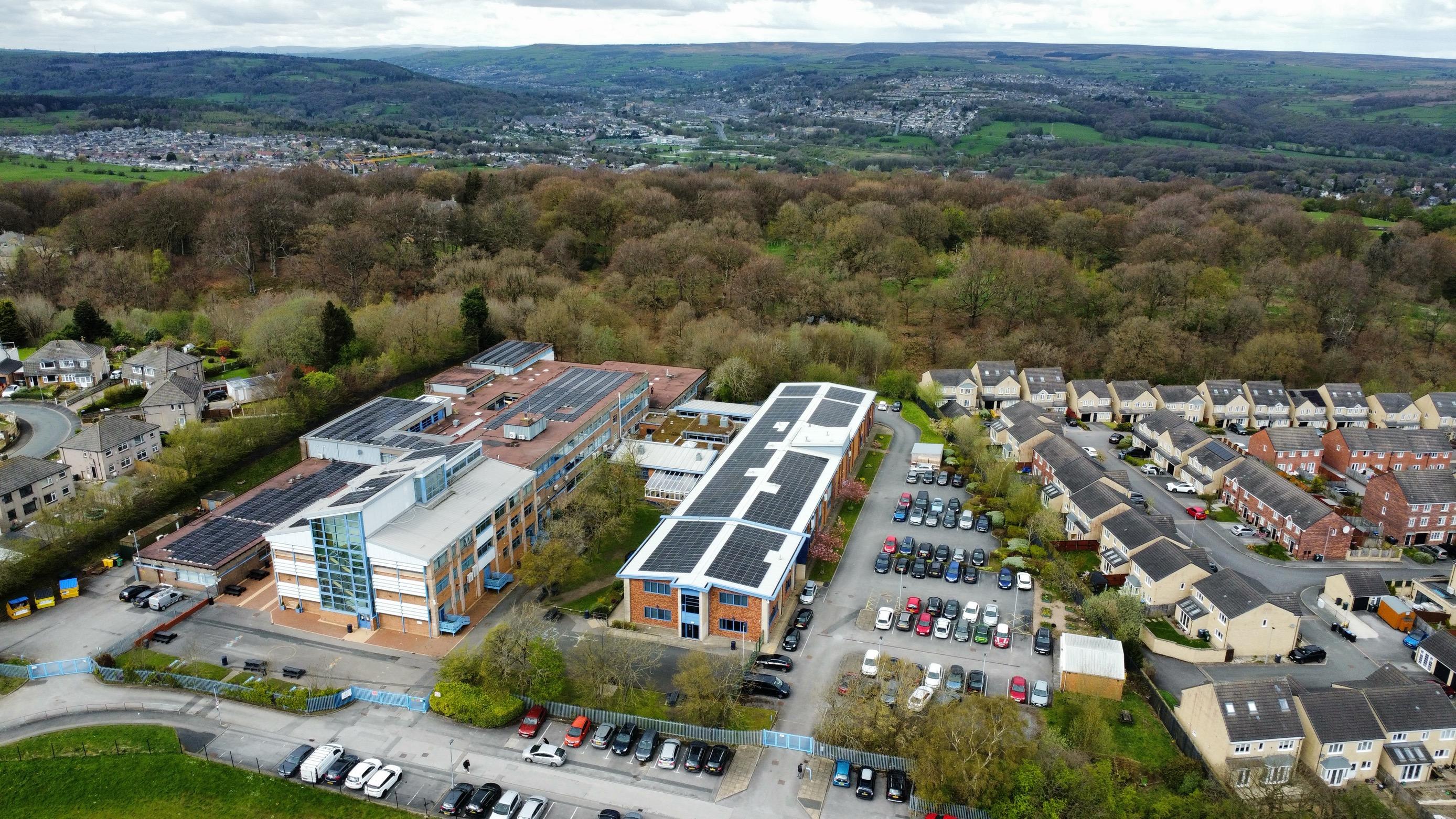
So, why invest in solar power?
Renewable energy is far less vulnerable to geopolitical volatility. Most countries can produce their own renewable energy, reducing reliance on importing energy. Renewable energy projects, such as solar and wind, have an initial capital outlay cost, but then low operating costs allowing for a fixed cost over time. Sunlight and wind are free and plentiful, unlike petroleum.
Solar power has seen immense growth over the last decade, partly driven by a 90% reduction in costs since 2010. It's no surprise then that in 2025 renewable energy - driven primarily by solar and wind - experienced record-breaking growth both in the UK and globally.
Here are some of the promising statistics from the last six months:
On roughly a third of days in 2025 at least half of Britain’s energy came from renewable sources, mainly solar and wind.
The EU had similar figures – wind and solar generated more power than fossil fuels for the first time in 2025
Globally renewable energy sources overtook coal as the leading source of electricity for the first time in the first half of 2025 (see Ember graph below)

Many schools are now turning to renewable energy. Any institution benefits from consistency. Solar panels produce energy at a predictable rate.
Excess energy can also be sold back to the grid. Schools have been able to benefit from financial savings, dedicated educational support as well as the environmental benefits.
Schools investing in renewable energy are also a great inspiration, leading by example for students, and allowing opportunities for conversation, education and encouraging sustainability in the next generation.
Solar for Schools provides educational resources prior to installation, during and after the process - allowing students to experience the changes as they happen.
After installation, students have access to their own energy data, a dedicated app and website with resources, assemblies and lessons. After a year, they will be visited by one of our educators - to ensure multiple educational opportunities.
Real-time energy monitoring encourages students to learn about generation and use.
Solar for Schools prides itself on the importance of this education. And on average we see that schools reduce their energy consumption by an impressive 30% post installation, simply by changes in behaviour.
As solar power technology continues to improve the sky is, quite literally, the limit.


Address
Osier House, Osier Way, Sible Hedingham, Essex, CO9 3FF United Kingdom
- +44 (0)1376 428984
- info@solarforschools.co.uk
We support the UN Sustainable Development Goals




© 2026 - Solar Options for Schools Ltd
Registered Company 9812345 VAT # GB232066930